- Export Guide
- Farm Management
The Complete Guide to Malaysia Durian Export Requirements
Learn the essential field practices, certifications, and documentation needed to prepare your durian harvest for lucrative export markets like China.
By Xianze Team
2 min read
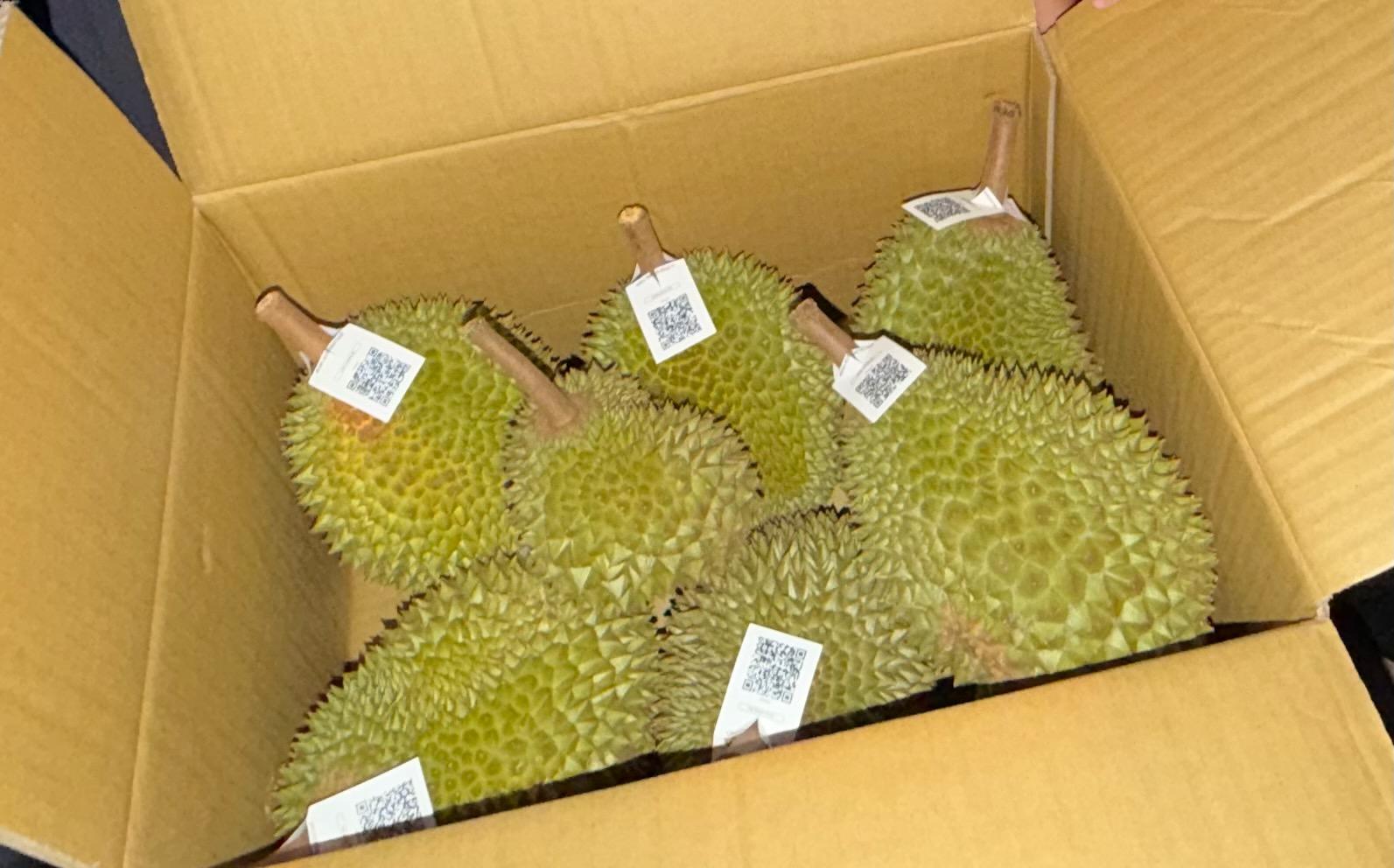
Exporting durians to highly regulated and lucrative markets like China requires strict compliance. From the moment the flower blooms to the time the fruit is packed into a cold truck, every step must meet specific agricultural and hygiene standards.
Here is a comprehensive guide to ensuring your durian harvests are export-ready.
1. Pre-Harvest Quality Control & Data Logging
Grade A export value is lost the moment a durian hits the ground.
- Preventing Ground Impact: For premium species like Musang King and Black Thorn, farmers tie a raffia string loop around the spiky body of the fruit to anchor it to the branch. This catches the fruit mid-air when it naturally drops.
- Managing Cross-Pollination: To ensure perfectly round, 5-chamber fruits, manual cross-pollination at night is crucial. Poor pollination leads to asymmetrical "frog-shaped" (katak) fruits with empty chambers that are immediately downgraded to Grade B or C.
- Data Collection & Traceability: Digital farm management reports containing yield data and harvest volume forecasts allow farmers to pre-sell harvests. This data also helps Chinese export buyers and logistics companies optimize their cold-truck routing based on predicted drop timelines.
2. Disease and Pest Management
- Pest Control: Individual fruits can be wrapped in physical mesh bags to protect them from pests like squirrels, which ruin crops by chewing holes into hanging fruit.
- Disease Management: Active management of diseases like Canker (Phytophthora palmivora) requires climbing trees to scrape diseased bark down to healthy wood and manually painting on a thick fungicide.
3. Required Export Certifications
To legally export your harvest, your farm and processing facilities must secure specific certifications:
- myGAP Certification: Ensures standard agricultural and pesticide management under the Malaysia Good Agricultural Practice scheme.
- Destination-Specific Registration: For exports to China, both the orchard and packing facility must be jointly approved, registered, and listed by the General Administration of Customs China (GACC), obtaining specific codes.
- Processing Standards: The packing facility must adhere to Good Manufacturing Practice (GMP) certified by the Ministry of Health (MOH) and maintain full traceability records.
4. Mandatory Export Documentation
Exporters must secure a stack of documents for each shipment:
- Export Permit: Issued by the Malaysian Quarantine and Inspection Services (MAQIS).
- Phytosanitary Certificate: Issued by the Department of Agriculture (DOA) to confirm the shipment is pest-free.
- Conformity Certificate: Issued by the Federal Agricultural Marketing Authority (FAMA).
- Health Certificate: Required for processed or frozen durian, issued by the MOH.
- Certificate of Origin (CO): Verified by relevant authorities to prove Malaysian origin.
5. Packaging and Labeling Compliance
- Labeling: Labels must be printed in the language of the destination market and display critical traceability data, including the farm’s Growing Area Code, the packing facility code, product details, and packing dates.
- Packaging Integrity: Packaging must be highly secure to contain odors during transport and maintain specific temperature controls.
Traceability starts in the field.
With the Xianze farm app, farmers can easily compile digital management reports, log tree-specific fruit quality remarks, and capture yield data. See, record, act, review — and get your harvest ready for the world. Contact us to explore solutions that help you fulfill these export requirements.
Want this on your farm?
We'll walk you through the app with your own zones and trees.